– The First Antagonist of Batal Stone
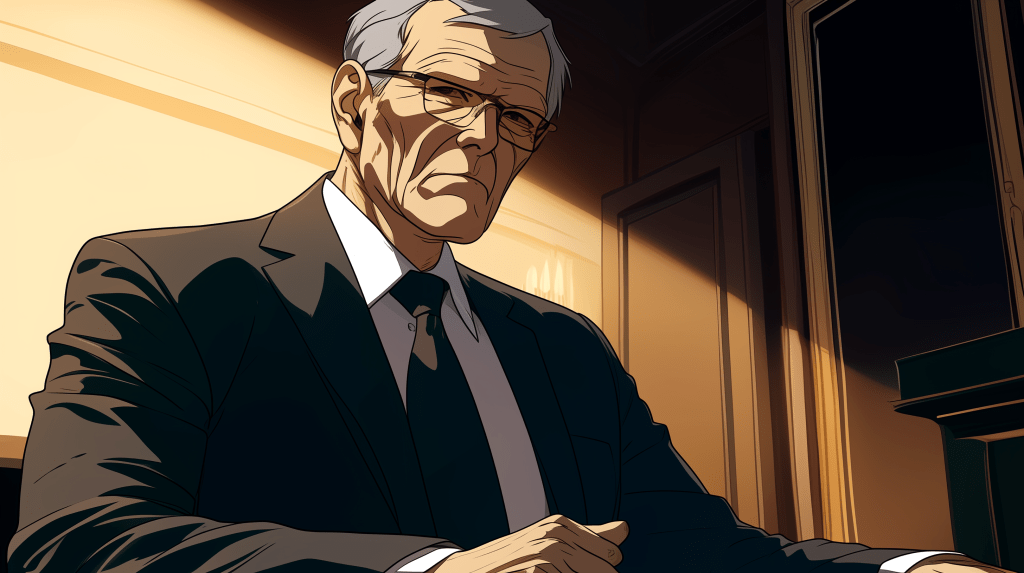
Wang Jong-cheol, who had been laughing heartily for a while, suddenly stopped and turned to Eun Bisa to speak.
“But you know, Bisa, the most astonishing part is this: that absurd lie I told the president—‘there’s a weapon inside the meteorite capable of destroying the world’—turned out to be true. Can such a thing be dismissed as mere coincidence? It feels like a sign that I am destined to become the owner of this Batal Stone.”
“Of course, Chairman. It truly seems like a coincidence meant for you,” Eun Bisa replied.
Wang Jong-cheol, seeming even more pleased with the response, raised his voice triumphantly.
“Bisa! I feel like my era is finally coming. I’m going to be the most powerful and terrifying person in this world. No one will be able to defeat me. Ha, ha, ha!”
In the Batal Stone series, Wang Jong-cheol serves as the primary antagonist to the first Batal, playing a critical role in shaping the story. Far from being a mere villain, Wang is a symbolic character who makes the hero’s journey more challenging and complex. Through his power and influence, he brings tension and conflict to the narrative, acting as a major obstacle that tests Kim Tan’s growth.
Wang Jong-cheol’s Background and Motivations
Wang Jong-cheol is the chairman of Oh-sung Group, one of South Korea’s largest conglomerates. He wields immense wealth and power, driven by an insatiable ambition. His defining trait is his relentless desire for dominance—not just economic gains but control over the entire world. This ambition makes him a ruthless, calculating individual, a characteristic that manifests in his confrontations with his adversaries.

His Introduction and Objectives
Wang Jong-cheol is introduced early in the Batal Stone story. His first appearance shows him seeking a mysterious meteorite that holds the Batal Stone, an ancient artifact of immense power. Wang knows the secrets of the stone’s mysterious capabilities and believes it will enable him to strengthen his grip on the world. His motives extend beyond greed, stemming from a deep-seated desire to expand his influence and authority.

Conflict with Kim Tan
Wang Jong-cheol directly opposes the protagonist, Kim Tan, presenting him with numerous trials. Wang’s cold and calculating demeanor contrasts sharply with Kim Tan’s warm and righteous nature, creating a significant thematic conflict.
Wang and his forces exploit Kim’s vulnerabilities, testing his physical and mental limits. They pressure Kim in various ways, attempting to make him abandon his path. However, these challenges ultimately contribute to Kim Tan’s growth, pushing him to overcome his fears and become stronger.
The Symbolic Role of Wang Jong-cheol
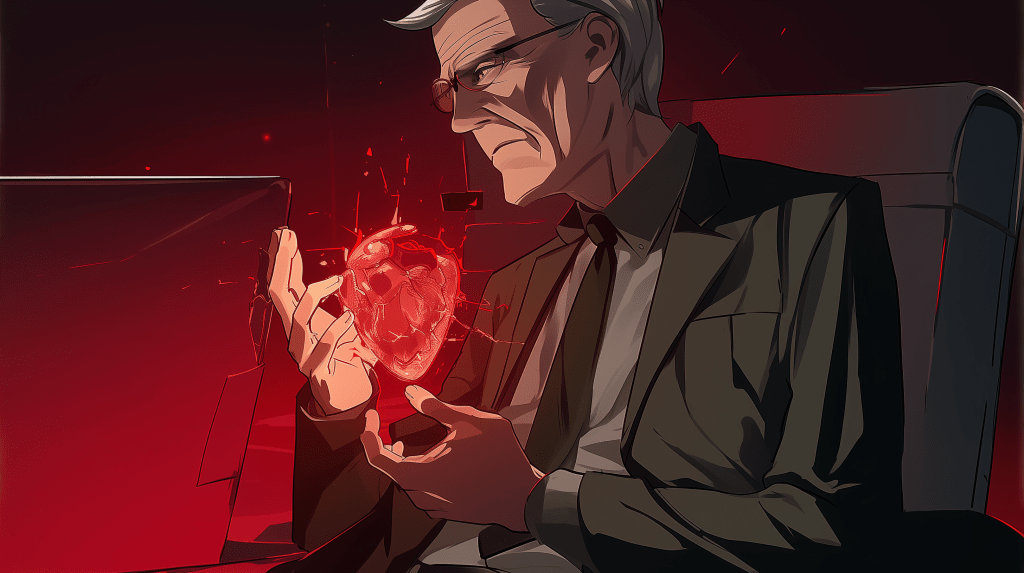
In Batal Stone, Wang Jong-cheol is not merely a physical adversary but a symbol of humanity’s endless greed and pursuit of power. He is a figure who is willing to sacrifice anything to climb to the top, reflecting the darker aspects of authority and ambition in modern society.
Kim Tan’s battle against Wang represents the struggle to overcome these desires and realize true justice. This conflict deepens the story’s themes, highlighting the importance of integrity and selflessness in the face of corruption and greed.
Wang Jong-cheol is a critical antagonist in the Batal Stone series, enhancing Kim Tan’s heroic narrative. His unyielding ambition and pursuit of power inject tension into the story while serving as a catalyst for Kim Tan’s growth and transformation. Through Wang Jong-cheol’s exploration, we gain insight into a character who is far more than a typical villain—he is a multifaceted figure whose presence underscores the story’s exploration of power, morality, and heroism.



Leave a comment