
-The Story of Two Enigmatic Tribes
The Barun and Oun tribes play pivotal roles in the Batal Stone series. These two tribes possess unique traits and goals, forming the backbone of the story’s central conflicts. Through their history, relationships, and distinctive cultural elements, we can delve into this mysterious world and the intriguing dynamics between these tribes.

Years ago, Panum had crossed paths with Oun while traveling through the Altai Mountains, and Oun had extended a hand to him.
“I want to become human,” Oun had said, his first words to Panum.
Sensing the sincerity in Oun’s heart, Panum had eventually accepted him into his fold, though trusting the entire Ho clan had been far more difficult. They were violent, impulsive, and prone to breaking into chaos—like a powder keg ready to explode. But Panum had faith in Oun, even if he couldn’t extend that same trust to the rest of his people.
Panum had given Oun one condition for their pact. “If you wish to become human, you must never eat human flesh, Oun.”
Oun had accepted this condition, his face filled with resolve. But now, that promise had been broken.
Panum turned back to the group, his voice booming once again. “Did you not vow to abstain from consuming human flesh until three moons had passed and twelve nights had gone by?”
The members of the Ho clan hung their heads in silence, but it was clear that they weren’t truly repentant. Their fear of Panum’s wrath was obvious, yet the genuine remorse was missing. Panum, sensing this lack of sincerity, grew even angrier.
As he seethed in silence, Oun, standing beside him, stepped forward and spoke in a soft, pleading tone. “We have no excuse, Panum. But please, give them one more chance. Everyone makes mistakes.”
At this, Panum’s eyes glistened with unshed tears, making him seem more like the child he appeared to be. His voice trembled with a mixture of sorrow and anger as he responded, “We are human—me, you, all of us. How could anyone—how could you eat another person? It’s heartbreaking… and it makes me furious!”
Origins and Characteristics of the Barun Tribe
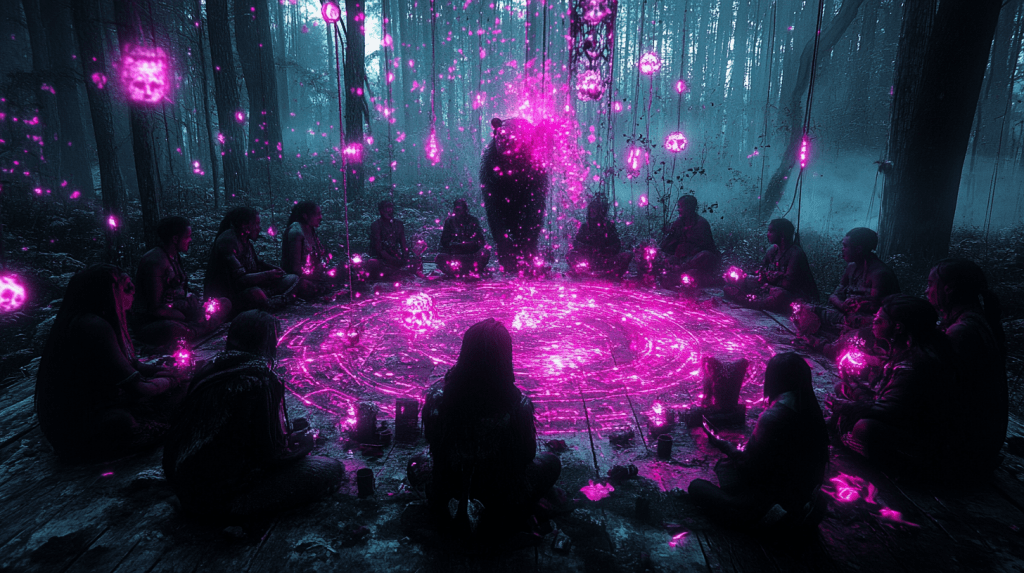
The Barun Tribe traces its origins to ancient times when they worshipped bears. This tribe values steadfast perseverance and an unwavering commitment to their beliefs. The name “Barun” derives from the Korean word “Barun”, meaning “righteous” or “correct,” reflecting their adherence to justice and the pursuit of the virtuous path.
The Barun Tribe shares a profound connection with nature, drawing their strength from the earth and its vitality. While they prioritize peace, they are capable of unleashing formidable combat skills to defend their lands and people when threatened. They dedicate themselves to fulfilling the prophecies of Panum, constantly training and committing to their sacred mission.
The bear they revere symbolizes endurance and resilience. This symbolism is inspired by a Korean myth. In the myth, a bear becomes human after enduring a test of consuming mugwort and garlic for 100 days. The tribe’s sacred relic, “Panum’s Heart”, has the power to identify heroes and bestow special abilities upon the chosen, such as Mudan, guiding their fates in accordance with destiny. Characters like Park To and Park wol come to understand their roles through this relic, supporting others and embodying heroic attitudes.

Origins and Ambitions of the Oun Tribe
The Oun Tribe worships tigers and has charted its own unique course, distinct from the Barun Tribe. The name “Oun” derives from the Korean word “Oen”, meaning “left,” symbolizing their tendency to challenge existing orders and forge new paths.
The Oun Tribe aspires to dominate the world through technology and knowledge. They revere the power of intellect, using it to reshape the world and striving to position themselves at its center. To maintain their edge over the Barun Tribe, they constantly innovate new technologies and strategies.
The tiger they venerate symbolizes courage and independence. This idea stems from the Korean myth where a tiger, unable to endure the same test as the bear, abandons its transformation into a human. Embracing this tiger’s spirit of challenge and strength, the Oun Tribe relentlessly pursues their goals. They leverage power and wealth to achieve their ambitions, which often puts them in direct conflict with the Barun Tribe.

Although the Oun Tribe also follows Panum’s prophecies, their interpretation and implementation starkly contrast with those of the Barun Tribe. The Oun Tribe uses the prophecy as a means to justify their ambitions, concentrating power and wealth to establish a new order. For them, the prophecy is less a spiritual message and more a practical tool for achieving their goals.
The Oun Tribe’s leaders emphasize their divine selection through the prophecy, uniting their people under this belief. However, their methods often lead to reckless sacrifices and violence, underscoring the moral complexities of their path.
Panum watched the two of them with a satisfied smile and said, “Barun, Oun, you must work together. Understood?”
Both nodded silently, their faces filled with determination. They were certain—no matter what, they would not allow themselves to be divided.
Omitted…
The faint light of the moon illuminated their path, and Barun looked up, noticing something. “The moon is getting smaller, Panum.”
“It will shrink completely and then begin to grow again,” Panum responded calmly.
“Haha, yes, it will,” Barun laughed heartily. His laughter was contagious, and soon Panum and Oun were laughing along with him.
After their laughter faded, they continued walking, with Barun, as usual, lagging slightly behind. Then, as if remembering something important, Barun suddenly stopped. Lifting the stone Panum had given him high into the air, he raised it toward the sky, letting it block out the moon entirely.
Gazing up at Panum’s heart, Barun murmured softly to himself, “May the children of Barun shine upon the dark world, like the light of the moon.”

Fateful Encounters and Conflicts Between the Tribes
In the past, the Barun and Oun tribes were united by Panum and pledged to protect the future of the world together. However, over time, their diverging values and goals caused a schism, ultimately leading to a collision of their destinies.
The Barun Tribe seeks peace through harmony with nature, while the Oun Tribe pursues world control through their knowledge and technology. This fundamental ideological conflict forms a core element of Batal Stone.
Key figures from each tribe make various decisions to uphold their beliefs, shaping the world around them in profound ways. Through these conflicts, readers are invited to reflect on the essence of true heroism and the ethical dilemmas surrounding the use of power and knowledge.
In Batal Stone, the story of the Barun and Oun Families transcends mere opposition, offering a dramatic narrative of clashing beliefs and values. Their story allows readers to move beyond simplistic notions of good and evil, engaging with deeper human dilemmas and the weight of choice.The Batal Stone series poses thought-provoking questions about the nature of true heroism and the essence of power that changes the world. Through the complex relationships and conflicts between these tribes, readers are drawn into a richly layered world where every choice and belief carries profound significance.


Leave a comment