Hidden Stories Behind a Heroic Name in Turkish, Hungarian, Kyrgyz, Kazakh, and Mongolian Cultures

“So… why do you keep calling me Batal?” Kim Tan persisted, still not convinced. His relentless questioning made Park To’s anger surge again, and his hands began to tremble with frustration. Sensing this, Park Wol gently grabbed his uncle’s hand, trying to calm him down.
Omitted…
Watching Park Wol grasp the situation and help Kim Tan, Park To felt his temper ease slightly. But as he struggled with how to explain the concept of Batal, Park Wol took over once again.
“Mister, let me explain. Batal means… well, it means ‘hero.’ Like Spider-Man, Iron Man, Batman, Superman—those kinds of heroes. That’s what Batal means.”
Park To couldn’t help but silently applaud Park Wol’s brilliantly simple explanation. Despite being a young child, Park Wol had an uncanny ability to clarify things in a way that made sense. Encouraged by Park Wol’s analogy, Park To added his own words.
“Exactly. I know this is all hard for you to believe, but just like Wol said, you’re destined to be a hero. It means you’re someone with the fate of a hero.”
The name Batal means “hero,” and its origins hold fascinating historical and cultural connections. This article explores the origins of the name, uncovering its etymology and the intriguing stories tied to it. The meaning of Batal begins with the Korean word “Batang” (foundation) and has evolved into a name encapsulating the image of a hero. Additionally, it connects with related terms in Mongolian, Eastern European, and Central Asian languages, further enriching its meaning.
Batal: A Hero’s Name Rooted in “Batang”

The Legacy of “Baedal” and “Batal” in Korean Culture
In Korea, the term Baedal has historically referred to the Korean people, though its precise meaning remains ambiguous. In modern times, Baedal has been humorously associated with Korea’s famed delivery culture, overshadowing its original significance. Inspired by the term Baedal and Korea’s culturally significant oak tree, Bakdalnamu, the creator of Batal Stone, 우아한 JS, envisioned the name Batal.
Baedal can be interpreted as symbolizing sacred lands or their guardians, while Bakdalnamu represents the resilience and foundational strength of the Korean people. These elements combine to imbue Batal with profound meaning, representing a hero who embodies core strength and determination.
Cultural Connections of “Batal” Across Languages
Korean: “Batang”
The name Batal draws inspiration from the Korean word Batang, meaning “foundation” or “essence.” It emphasizes the fundamental basis needed for growth and success. In this sense, Batal symbolizes a hero’s journey of self-discovery and growth, rooted in their core essence. It represents not just physical strength but also the wisdom and courage to act in alignment with one’s true self.

Mongolian: “Baatar”
In Mongolian, Baatar (as in the capital city Ulaanbaatar) translates to “hero.” Historically, Baatar referred to brave warriors known for their courage and dedication. The connection to Baatar lends the name Batal qualities of valor and unyielding spirit, embodying the heroic ideals cherished in Mongolian culture.

Hungarian: “Bátor”
In Hungarian, Bátor means “brave” and is often used to describe courageous individuals. The term appears frequently in historical contexts, symbolizing valorous warriors and armies. The linguistic similarity between Bátor and Batal highlights shared cultural values across Eurasia, tying the concept of heroism to diverse traditions.
Turkish: “Bahadır”
In Turkish, Bahadır means “brave” or “heroic.” This term is widely used in Turkish history and literature to depict courageous warriors and legendary figures. Sharing an etymological link with the Mongolian Baatar, Bahadır reflects the historical interactions between Turkish and Mongolian cultures. Through its connection to Bahadır, the name Batal signifies bravery and the heroic ideals celebrated in Turkish heritage.
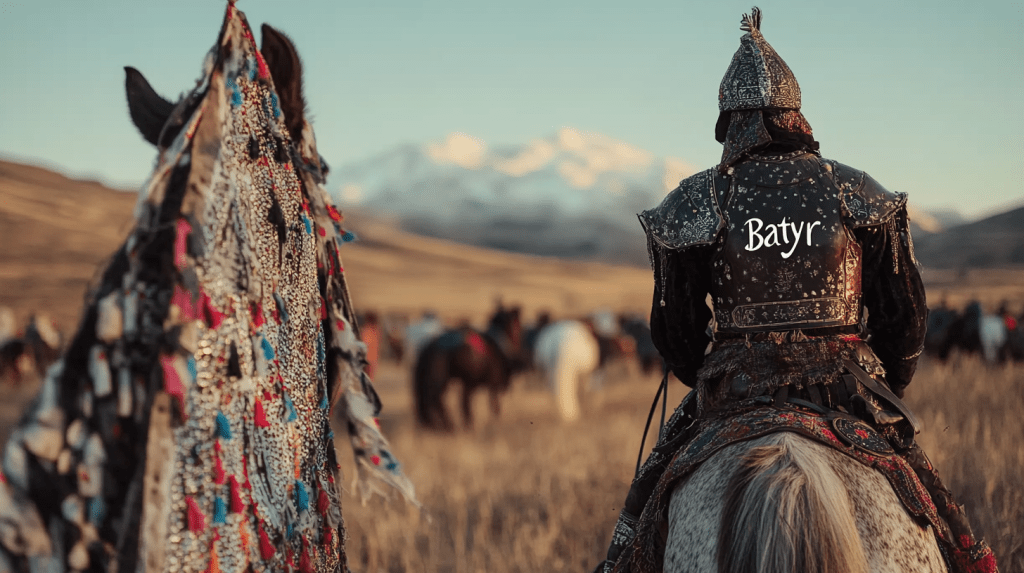
Kyrgyz and Kazakh: “Batyr”
In Kyrgyz and Kazakh languages, Batyr means “hero” or “brave warrior.” The term frequently appears in traditional epics and folklore, representing individuals who protect their communities and uphold justice. The phonetic and semantic resemblance to Baatar, Bahadır, and Bátor underscores the shared archetype of heroism across Central Asia.

Symbolism of the Name “Batal”
The name Batal transcends its literal meaning of “hero,” embodying a blend of cultural elements from various traditions. Rooted in Korea’s Batang and connected to Mongolia’s Baatar, Hungary’s Bátor, Turkey’s Bahadır, and Central Asia’s Batyr, the name represents universal human values of courage, resilience, and self-discovery.
In Batal Stone, the name Batal symbolizes a hero embarking on a courageous journey grounded in their essence, guided by the universal ideals of bravery and strength. It bridges cultural and historical threads, offering readers a hero whose legacy resonates across time and place.
Sources
- Mongolian Baatar: Refers to heroic warriors in Mongolian history. en.wiktionary.org
- Hungarian Bátor: Means “brave,” symbolizing valorous individuals. en.wiktionary.org
- Turkish Bahadır: Describes brave and heroic figures in Turkish culture.
- Kyrgyz and Kazakh Batyr: Represents courageous warriors in Central Asian folklore.



Leave a comment